
How Healthcare Fails Perimenopause & What Needs to Change
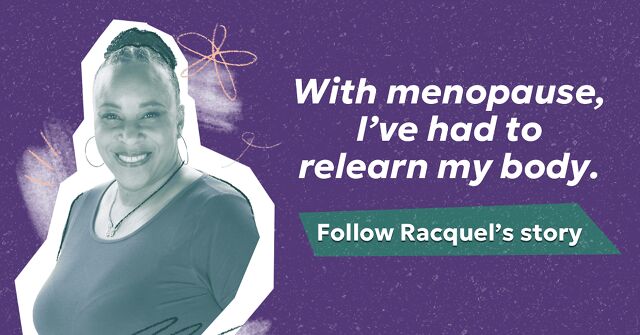
My advocacy work started with perimenopause. I was frustrated by the lack of guidance and treatment options. When I first brought up the symptoms to my primary care doctor at the time, she shook her head with a touch of sadness and said, “You’ll find these to be some of the most difficult years of your life.”
I have a complicated relationship with the word “resilience.” I work in healthcare, and resilience has come to have negative connotations, especially after COVID began. Resilience can be viewed as placing the burden on the individual rather than the systems that are causing harm. That it’s a cultural expectation that insists we remain strong, i.e., able to produce/work, regardless of the circumstances. That privilege is part of resilience, and not everyone may have access to the resources to build it up effectively.
A market for influencers
When it comes to menopause, there are parallels that can be drawn here. Women are expected to push through perimenopause with minimal guidance or interventions. According to a recent article, fewer than 30% of residents and only about a third of OB-GYNs receive education about it.1

One would think that the health and well-being of 75 million Americans experiencing the menopausal transition would have more resources allocated to making their lives more comfortable, so it’s become a gap being filled by an unregulated wellness industry driven by influencers. In the same article, they noted that the current wellness market for products related to menopause is between $10 to $15 billion, and is expected to exceed $25 billion in about five years. 1
As I read through the article, my hackles were raised at women’s lives and health being described as a “consumer category,” ripe with “opportunity” by big consulting and investment firms. My social media feeds are full of very targeted ads, I’m served endless promises of fixing all of my menopausal problems with a click of a button and a credit card. On the flip side, I’m heartened to see big investments from philanthropists with the goal of producing research, which is sorely lacking in this area.
In today’s world, resilience is often met with product placement. You’ll be more resilient if you buy these supplements, or subscribe to a meditation app or workout program. The cost adds up steeply and quickly, and while some of these things may be helpful, the base need is for a better understanding of the effect that the menopausal transition has on our biology. Unregulated products are not a proper substitute for evidence-based solutions.
This or That
Do you get a lot of menopause-specific targeted ads?
Fuel for advocacy
As I got deeper into my advocacy work, I was introduced to other perspectives on the concept of resilience. I enrolled in a training program about trauma-informed care and was swept up in virtual discussions about the meaning of the term. A new, more positive light was cast on it.
Some people questioned whether resilience is a trait, a process, or an outcome, or a combination. They framed the definition in terms of how we understand adversity, trauma, and healing, and how that definition informed how we approached adversity and healing. We talked about the most important drivers of resilience, two of which included believing in oneself and access to support.
A bell chimed in my mind. To me, resilience felt like surviving, not thriving. But as these discussions unfolded, I began to find a use for this energy that rankled me. Putting all of this together, the negative aspects of resilience started me on my advocacy journey, but over time, I needed to do something with that energy. I needed to produce something positive, to offer resources that I didn’t have access to in the past for anyone who struggled in similar circumstances.
My advocacy work has changed a lot over the past dozen years or so. Websites and social media handles have come and gone, and I finally landed on a platform that truly speaks to who I am and how I want to change the world. Part of the issue was that I was lacking critical diagnoses.
It took far too many years to learn that I lived with Complex PSTD and endometriosis. Once I was able to take a step back and understand how these undiagnosed conditions influenced my perception of myself, the path forward became brilliantly clear.
Once I knew what I was actually dealing with and why it made my experience with perimenopause so difficult, I was able to gather the resources I needed, and now I intend to share them as widely as possible. Resilience shouldn’t be a buzzword. It should be the stepping stone to advocate for the changes that need to happen to improve our lives, experiences, and outcomes.
Join the conversation