
Somatic Therapy and Menopause: Learning to Tune In

Menopause taught me to slow down and take stock. It also taught me to lighten up. After years of being an overachieving perfectionist who didn’t know when to stop, I realized that I didn’t know how to stop. If I was awake, I was working.
I had so much energy that I speed-walked everywhere. At least three to five miles a day. I bragged about when I beat the bus to my destination (this is not necessarily hard, if you’re familiar with Boston-area traffic on a bad day). I walked to work and back, and to all the errands and appointments in between.
With perimenopause came a storm of symptoms that took over my life
I was forced to acknowledge that, “Hey, I actually live in this body and it’s not doing so well!” The impact of chronic stress and dissociation took its toll, and due to a variety of medical issues, hormone replacement therapy was not in the cards.
Perimenopause was the spark that ignited a journey for me to figure out who I actually am
I spent decades conforming in order not to draw any attention to myself. But as hot flashes, migraines, and anxiety happened at all hours of the day, that invisibility cloak slipped off.

I learned that that one of the symptoms I live with is called muscle armoring, an instinctual mechanism that’s related to fight or flight. My body is tensed up all the time, and it’s impossible to relax. Over time, it turns into chronic pain.
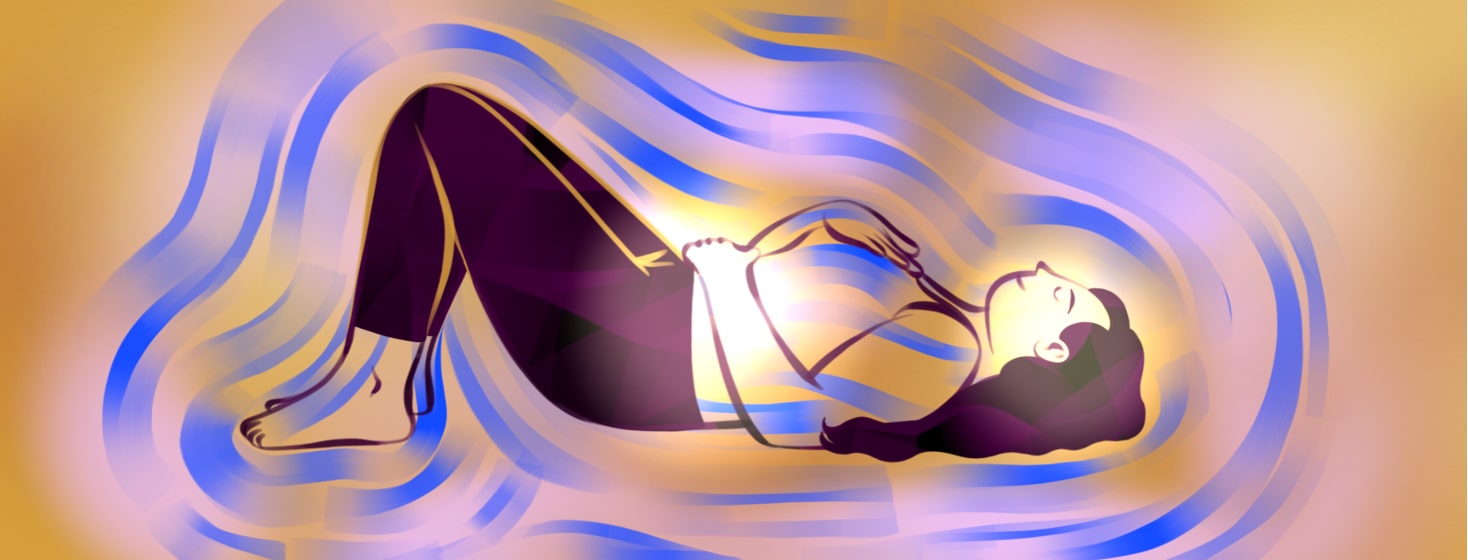
I started somatic therapy several years ago. The idea is that with complex trauma and chronic pain, the body becomes so accustomed to holding tension that it perpetually activates the stress response.1 This treatment modality targets the nervous system through bodywork and sensory exercises that help to make the mind more aware of what the body is doing—befriending the nervous system, if you will.1
Learning to go with the flow
In the first program I joined, I watched an instructor demonstrate the movement lessons. It looked silly. “There’s no way I’m doing that!” I said. Now I do those movement lessons at every opportunity, whether it’s a dedicated bodywork session or I’m waiting for the water to boil for my tea.
I dance, swing my arms, and explore the feeling of actually taking up space. Aspects of yoga, pilates, and tai chi are often part of the sessions. For me it’s been incredibly soothing and liberating, and has the added benefit of keeping me flexible and building strength as the effects of the menopausal transition impact my body.
I later joined a program for trauma-informed care and somatic therapy, and there was a fun practice where the instructors would use creative prompts to get people to tune into what their bodies were telling them. Again, there was a lot of eye-rolling on my part at first.
Then as I participated, the realization struck: this is actually helping me identify how I feel! Flat descriptions of “I’m stressed out” were not nearly as helpful as “It feels like someone has hold of the back of my neck and won’t let go.” Now I could identify exactly where the pain came from and target exercises to help.
It’s also been helpful in figuring out exactly what emotions I’m experiencing, and as an artist and writer, the creativity serves as a source of inspiration. “I feel like I’m slowly sinking into a bog” gave me a much more visceral experience than “I’m depressed.”
Liberating my joy
Over time, these became glimmers of inspiration and hope. I have fun with the movement and the words, despite my “too cool for school GenX girl who was not allowed to feel anything...ever” attitude.
All of this taught me to understand things that I was oblivious to in the past. Dissociation is frequently used as coping mechanism in both chronic pain and trauma.2 Like many women, I was encouraged to push through and neglect my own needs. That came at a cost that didn’t sink in until things fell apart.
My menopause years have turned into my Inner Crone taking the hand of my Inner Child with a kind smile and saying, “Let’s play. It’s okay to be silly. Make the most of what you can, and don’t worry about what others think, because life’s too short. Be who you want to be.” Through their connection, I found healing and safety.
Join the conversation