

Parenting Through Perimenopause: When Hormones Affect Everything

Nobody prepared me for how complex this could become. Perimenopause isn’t just irregular cycles and panic-inducing hot flashes; it’s a disruption unlike any other I have experienced. It’s a full-scale, soul-crushing, patience-wrecking interference in my life that happens while life expects us to keep showing up and performing at regular levels. And when you’re simultaneously parenting through that, especially with kids of different ages and stages, the risks to sustaining peace within our home become much higher.
A tale of 2 hormonal ecosystems
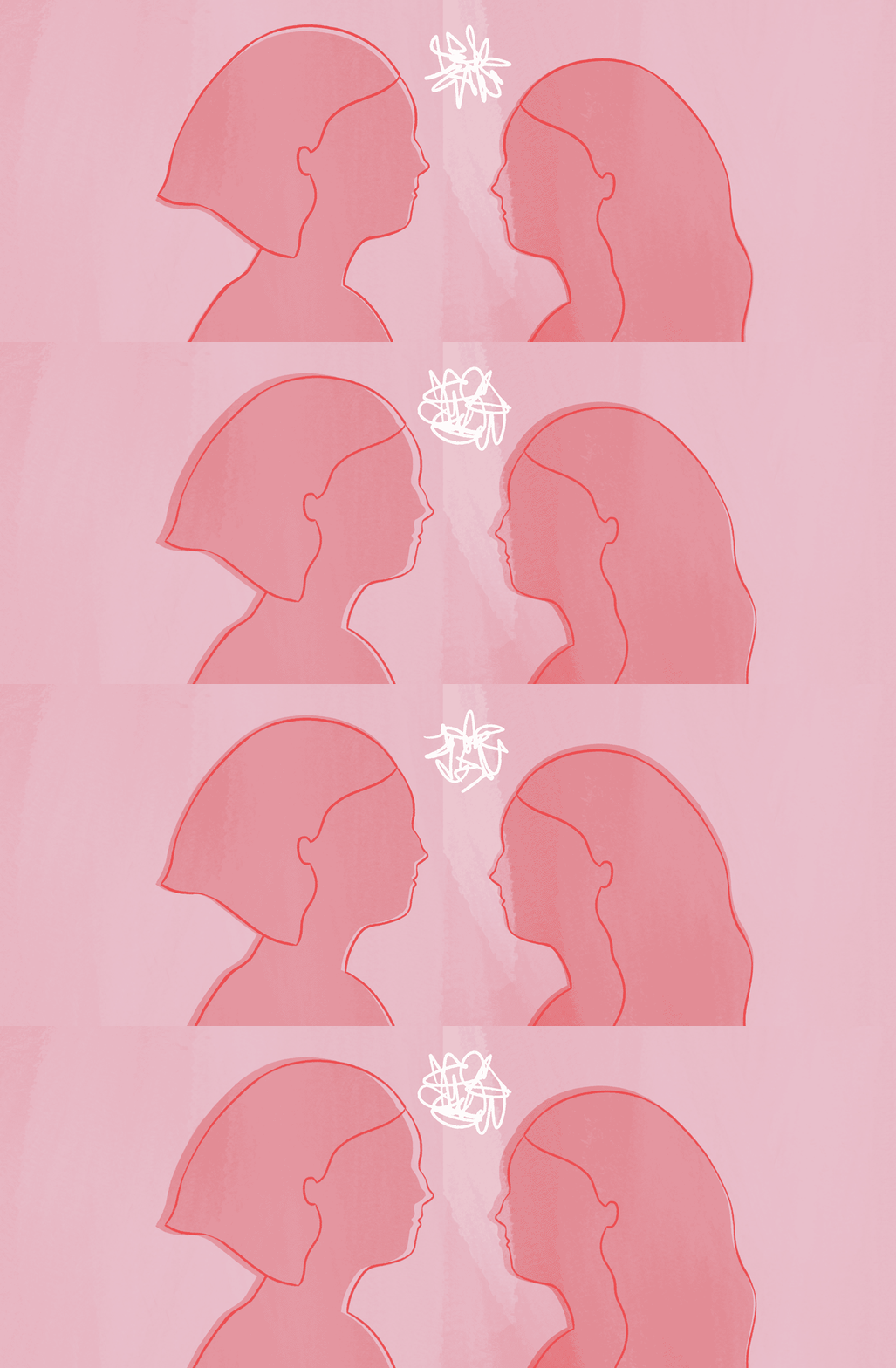
I am raising a 7-year-old son while having my almost 20-year-old daughter under the same roof. My daughter and I are operating from two very different yet very emotional and disturbingly hormonal ecosystems. While attempting to help her navigate her own struggles, I am also navigating mine.
The fundamental difference that I find with a hormonal 19-year-old and a hormonal 39-year-old is self-awareness. I don’t always have a grip on that awareness, but age and life lived has instilled the understanding of how critically valuable analyzing oneself is.
At 19, I didn’t have a grip on that, not even in the slightest. So, when one side lacks that, it lends to growing complexities within our relationship. There are days when everything is peaceful, cohesive, even. Other days, you can feel the shift in the air, and the general vibe in my home changes.
When symptoms masquerade as truth
The hardest part for me to articulate in the mental toll this takes of me. The way that this perimenopausal journey holds the door wide open to thoughts that don’t feel like me, yet in those moments, feel completely true to my soul. I have experienced pre-menstrual moments where the self-depreciating thoughts become brutal. That negative self-talk presents as core beliefs in those moments. As if they have always been a part of my belief system. As if they’re facts, instead of symptoms.

In those moments, I’m not just my biggest critic, but I become my biggest bully. It feels so real, which is the most concerning part. I’ve had intrusive thoughts that tell me that my family would be better off without me. Let me be clear, I am not actively suicidal at any capacity. But during the darkest hormonal dips, suicidal ideation has forced itself into my thought processes. That has made me take several steps back, time and time again, to center myself and get honest about what’s happening.
Choosing help over powering through
Ultimately, I made the decision that this just isn’t something that I am going to “power through,” or “get over.” This is something that needed addressed, and immediately. Psychiatry, therapy and medication in recent weeks have become a part of my journey. I’m pursuing it all. My seeking help initially felt like I was a failure, but it’s quite the opposite. I refused to let these temporary hormonal chemistry shifts to sabotage my life and my relationships. Because the harsh reality of this is that parenting doesn’t stop while you’re navigating perimenopause.
My daughter is navigating her own life, mental health, hormonal cycles, and internal battles. When our two disregulated central nervous systems clash, it escalates too fast. We’ve had moments that I am not proud of. My reactions didn’t at all reflect who I am as a mother, but instead, reflected where I was mentally in those moments. That was a fundamental wake up call for me.
There's no award for suffering
There is nothing noble about suffering in silence. There is no award ceremony for sucking it up and toughing it out while you’re loved ones absorb the impact of what we’re going through. I have a 7-year-old watching me and learning what emotional control and regulation looks like. My behavior showcases for him what is normal. He doesn’t need a perfect mom, but he needs a present one, a calm one, a regulated one.
So, my strategy is different now.
I am much more intentional with taking pauses when necessary. I question every thought or feeling that presents itself instead of immediately assigning them as facts. I separate what is hormonal, what is situational and what is authentically me. I find that what has been most important in this process is my taking responsibility for my internal struggles so that it doesn’t spill over on them. Because these thoughts and feelings? They pass; they really do. Every single time they pass.
Finding clarity beyond distortion
When they pass, I’m left with real clarity and such a deep awareness that those thoughts weren’t ever mine to begin with, they’re symptoms, the distortions are temporary. None of it is true. If you’re in this phase of your life and you feel like you are dismantling on a rapid spiral, trying to hold it all together while not being able to find a way off the emotional rollercoaster, know that you aren’t broken. This is a biological issue that deserves support, understanding and strategies to carry us through.
I couldn’t allow the people I love the most to be collateral damage to my avoiding addressing this issue with a professional. What works for me, may not work for others, and vice versa. That is okay. For me, after deep contemplation, I decided to introduce a mood stabilizer – which I am currently 2 weeks in.
My significant other and both of my children have expressed how different I seem, better. My mind is clearer; I am already noticeably more emotionally regulated. I even thought, “maybe it’s a placebo?” It’s bizarre how helpful it already is for me.
Medication doesn’t have to be a forever Band-Aid, but when suicidal ideation is playing a frequent role in your thoughts, it’s time to consider a different strategy. For me that strategy was getting the help. Not waiting until later when it’s far worse. Because my kids didn’t just need me here in the flesh, they needed me healthy, they needed me mentally well. They need me to find resolutions, and that’s what I will always do for them.
Join the conversation